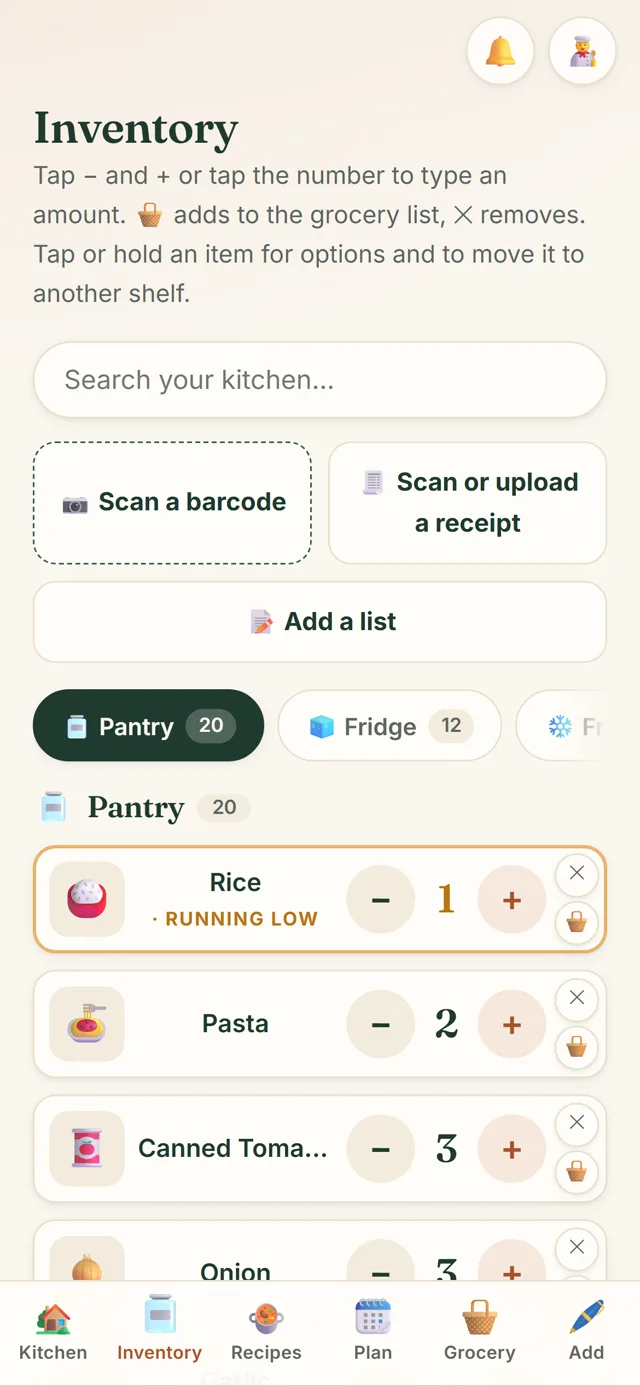
One photo of the receipt, and the shopping puts itself away.
You've just carried nine bags in from the car. The last thing you want is to type forty items into
a phone. The Pantry reads the paper receipt instead. Every line lands on the right shelf with its
amount, from any store, in about four seconds.
Every inventory app works on the day you set it up. The trouble starts the first time you shop.
Forty new things come through the door and the app knows about none of them, and now you're
standing in the kitchen with a phone in one hand and a bag of onions in the other, deciding
whether to type. Most people decide not to. By the second shop the app is a stranger to your
kitchen, and a list that's wrong is worse than no list at all.
Barcodes help, but only with packets, and only one at a time. Nothing on a bag of onions scans.
Linking a supermarket loyalty account only works at the stores on that list, and it misses
everything you paid cash for at the farm stand. The receipt is the one record of the whole trip
that every store hands you, printed, on the way out the door.
How the scan works
Photograph the receipt.
The Pantry reads every line, works out what each abbreviation means, the quantity and the
size, and which shelf it belongs on. Pantry, fridge, freezer, spices, or household for the
paper towels and charcoal.
You get a review list of the whole trip, item by item, to glance over and correct in a tap
if a line needs it.
Tap confirm. The shelves update, and the recipes update with them.
That last step is the point. The Pantry keeps real amounts, so the moment the chicken and the
rice are on the shelves, the recipes that need them move into the make it now list. Cook one,
and the amounts come back off. The receipt is how a full, true inventory stays full and true
without you working at it.
Any store, because it reads paper
Because it reads what's printed, not what a store's computer is willing to share, it doesn't
matter where you shopped. The supercenter, the warehouse club, the Hispanic grocer with the
good cilantro, the Saturday farm stand that gives you a handwritten slip. If it printed a
receipt, The Pantry reads it. No loyalty card to remember. No list of supported stores to be
disappointed by. No account to link.
What it does with the photo
Reads it once, pulls the text, and throws it away. Receipt photos are never stored, so your
shopping history isn't sitting on a server somewhere. The only thing that persists is the food
on your shelves.
Three other ways in, for the days there's no receipt
Scan a barcode and the item files itself to the right shelf, matched against two food
databases. Speak a list while you unpack. Or type, for the one thing the receipt didn't cover.
Getting food in is the easy part, which is the only way it ever stays in.
Questions people ask first
Does it work with receipts from my store?
Yes. It reads the paper receipt itself, so it works at any store that prints one: the supercenter, the warehouse club, the corner grocer, the farm stand. There's no loyalty account to link and no list of supported stores.
How long does a receipt take?
About four seconds for a full cart. You take the photo, the items appear in a review list, you tap confirm, and they're on the shelves.
What if the receipt says GV SHRD MOZZ?
That's exactly what it's built for. Store receipts abbreviate everything, and The Pantry reads them the way a person who shops there would: GV SHRD MOZZ becomes Shredded Mozzarella and goes in the fridge.
Does it get the amounts right?
It reads the quantity and size printed on the receipt, then shows you the whole trip as a review list before anything lands on a shelf, so you can correct a line in a tap. Nothing is added silently.
What happens to the photo?
It's read once to pull the text, then discarded. Receipt photos are never stored.
Is receipt scanning free?
The free plan includes trial receipt scans so you can see it work on your own shopping. Paid plans include a monthly allowance, and the top plan has no limit.
Try it on tonight's receipt.
Sign up, photograph the receipt from your last shop, and watch the shelves fill. Free to start. No card.